
What agentic commerce means for fashion and payments
Miranda Priestly would absolutely have an AI agent doing her shopping. She’d just never admit it.
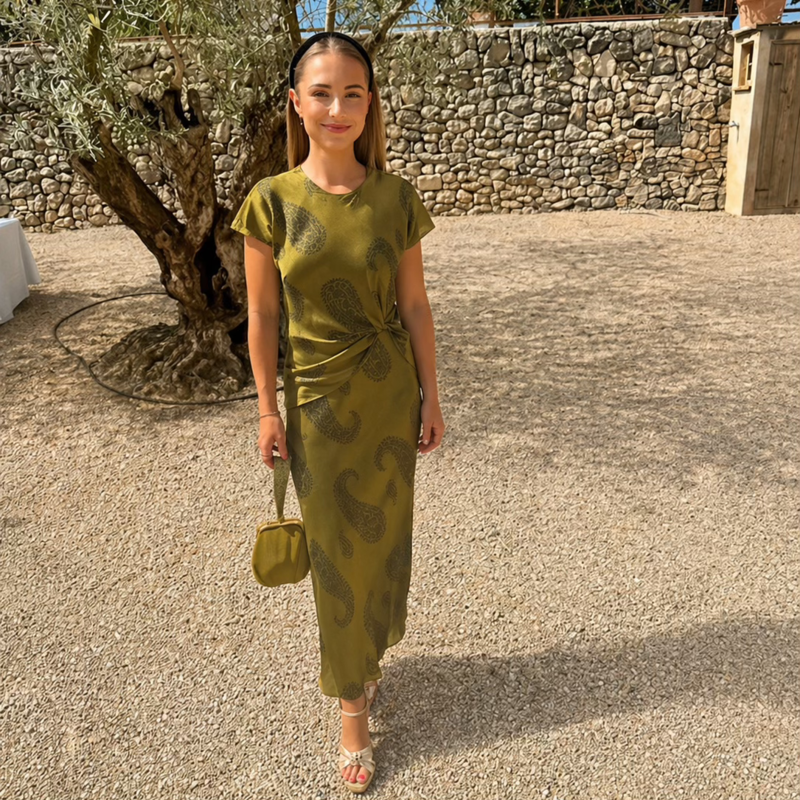

I saw Devil Wears Prada 2 the night it came out. Obviously.
And two days later, a humanoid robot walked the Met Gala red carpet alongside Alexander Wang.
The theme this year? “Fashion is Art.” Apparently AI got the memo!
Somewhere between Miranda Priestly fighting to save Runway magazine from irrelevance and a robot posing for photographers on the red carpet, I couldn’t stop thinking about payments.
…Bear with me…
The film’s central tension, a print institution trying to survive in a world that has moved digital, mirrors something I think about every day working in fintech. Because right now, fashion retail is standing at the same crossroads. The way we discover, browse and buy is changing faster than most people realise.
And the payments infrastructure underneath needs to change with it.
The tension is real
Part of me craves simplicity. Real life. In person. Paying for my morning coffee by tapping my card. Browsing a rail in an actual shop. Trying things on. The tactile, human, physical experience of buying something I love.
But another part of my brain is watching a shift that can’t be ignored.
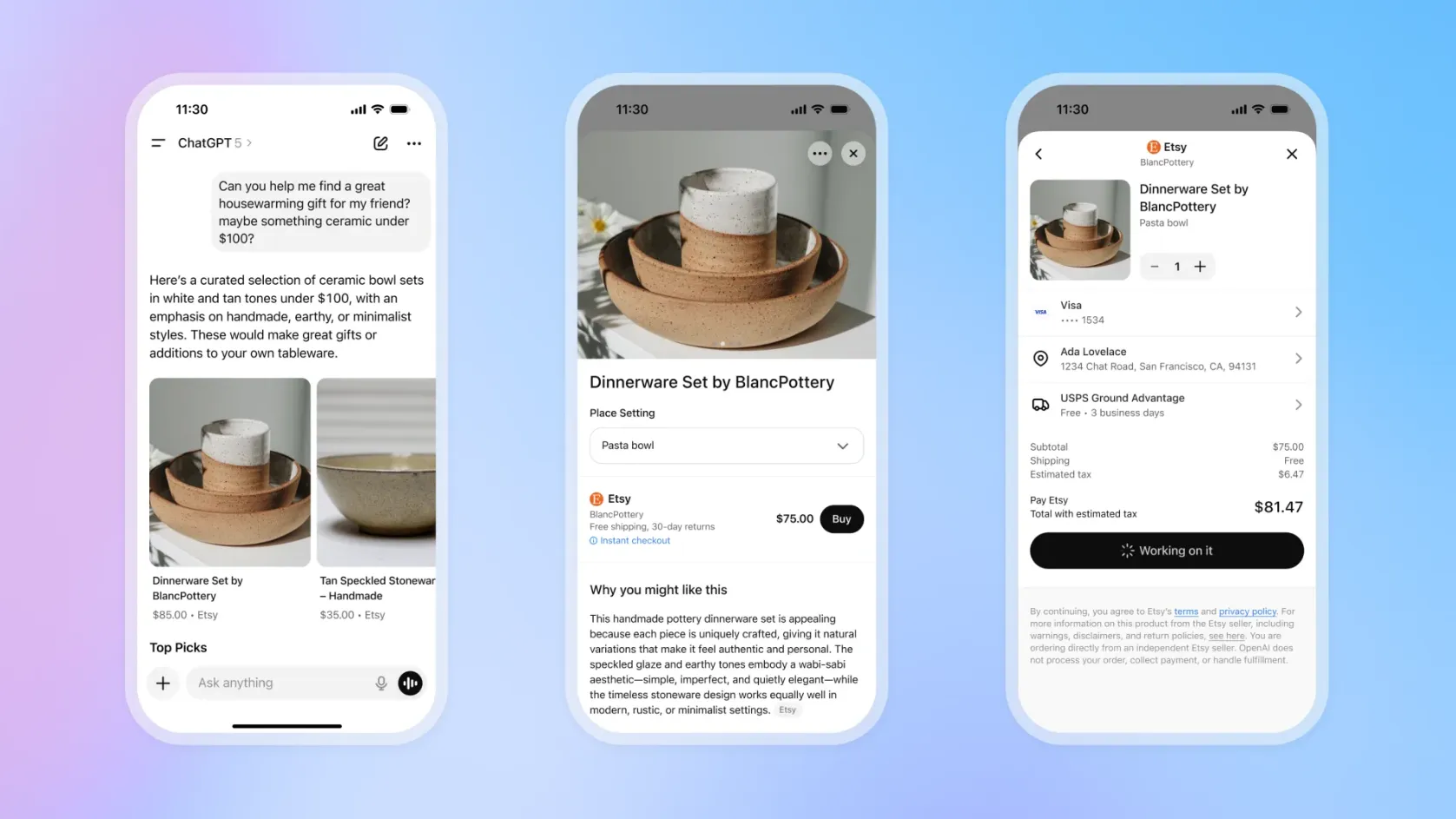
Agentic commerce (the ability for AI to act on your behalf, searching, selecting, negotiating, and paying) is moving from concept to reality faster than most brands are ready for. And fashion? It’s one of the most personal categories there is. Which makes this shift fascinating.
What agentic commerce could actually look like
Here’s how I think it will look like in practice (and none of this is as far away as you might think):
“Find me a cerulean jumper. Not blue. Not turquoise. Cerulean.”
Your AI agent searches across retailers, filters by your size, your style profile, your budget, and your purchase history. It presents three options. You approve. It buys. The payment happens invisibly in the background within the parameters you set. No browsing, no tabs, no decision fatigue.
1. Chatbot negotiates with chat bot
You’re selling a bag on Vinted. A buyer’s AI agent opens a negotiation with your AI agent. Offer, counter-offer, accepted. Payment settled. The transaction completes without either human lifting a finger.
2. Your personal stylist, running overnight
You give your Zara agent £300 and a brief: summer wardrobe, sale items only, everything must work together.
You set it the night before the sale starts. You wake up to a complete capsule wardrobe, in your size, within budget, styled into outfits, with a mix-and-match guide. It's personalization at scale, operating while you sleep.
3. The one that scores you extra parent points
Sabrina Carpenter justannounced a new tour and you know what happens next. The page crashes. The queue is 200,000 people long. You refresh for what feels like forever, hoping to be lucky enough to get a ticket.
But what if you just... didn't have to do that?
You give your AI agent your ideal seats, your budget, your dates. It joins the queue instead of you. It waits. It buys. And you wake up to tickets in your inbox (and a very happy daughter).
The data tells a more complicated story
But here’s where it gets interesting. The technology is moving faster than consumer trust.
Vogue Business surveyed 250 of their readers in the UK, US and Europe earlier this year on AI and fashion shopping. The findings are striking. Only 31% said they would outsource shopping to an AI agent (even if it knew their taste and purchase history). Fewer than a quarter trust AI chatbot recommendations in fashion and beauty.
And the single biggest barrier to adoption? Payments.
As one respondent put it:
“I don’t care if my dress size gets leaked in a data breach. I care if my card details do.”
And that’s really the point. The barrier to agentic commerce in fashion isn’t the AI. It isn’t the product recommendations. It isn’t even the user experience. It’s payments trust.
Specifically: 72% of Vogue Business readers said they would not share carddetails with an AI agent.
Yet….
We’ve been here before
This trust gap isn’t new. We saw it with eCommerce in the late 1990s. Consumers were happy to browse online but deeply reluctant to enter card details. The problem wasn’t the shopping experience; it was the payment layer.
And what solved the trust issue was the invisible infrastructure that made online payments feel safe: encryption, Tokenisation, 3DS, and eventually one-click wallets.
The technology got better and the security got stronger. Now we don’t think twice about buying online (for me, a little too often…)
The same shift is coming for agentic commerce.
McKinsey’s State of Fashion 2026 report identifies the AI Shopper as one of the defining trends of the next five years, with autonomous agents completing purchases on behalf of consumers already moving from pilot to reality.
The race to build the agentic payments stack is already underway. Open standards for agent-to-agent payments are being written right now. I’m watching it happen in real time at Nuvei. We’re working alongside Google, Microsoft, Visa and Mastercard as the new rules of commerce are being written.
The seamless, secure, trusted payment layer that makes an AI agent feel as safe as a tap-to-pay terminal?
It’s coming 👀
The physical experience isn’t going anywhere
It’s worth saying clearly: none of this means the physical retail experience is disappearing. The Vogue Business survey found that 40% of respondents still prefer in-store for luxury purchases, with a further 37% taking a hybrid approach. The primary drivers? Assessing quality and fit. Things an AI agent genuinely cannot replicate.
Two-thirds of respondents said their in-store experience would be hindered by an AI robot assistant. The human moment matters and it will continue to matter.
What agentic commerce does is take over the transactional parts of shopping: comparison, searching,negotiating so that the human parts can be even more human.
More considered. More pleasurable.
Whether you’re being served in a boutique or waking up to the wardrobe your AI agent built overnight, the best payment is the one you never notice.
It disappears into the moment.
The bottom line
Fashion is entering a new era of commerce. And the most exciting thing about it? It doesn’t have to be one or the other.
Sometimes I want to lose an afternoon in a boutique, touch the fabric, try it on, feel the experience. Sometimes I want to wake up to a wardrobe my AI agent curated while I slept. Both are valid. Both are me. Just on different days, in different moods, for different reasons.
The brands and platforms that win will be the ones that understand this. And payments just needs to disappear into whatever moment that is. Effortlessly. Elevating the experience without interrupting it.
Miranda Priestly would absolutely have an AI agent doing her shopping.
She’d just never admit it.



Ready to grow everywhere?
Get started with Nuvei – the growth infrastructure for every payment, everywhere. One intelligent system, built to scale.